ServicesEnergy Efficient Windows
Energy Efficient Windows in Walnut, CA
We replace drafty single-pane and old aluminum windows with dual-pane, low-E units that keep summer heat out and cool air in. Our crew handles glass with care, seals every opening tight and keeps your family clear of the work area.
What makes a window energy efficient
An efficient window does two jobs. It slows the heat moving through the glass, and it seals tight in the wall so air can't leak around it. Most older windows fail at both. Thin single-pane glass passes heat right through, and bare aluminum frames conduct it even faster.
The windows we install have two panes of glass with a sealed gap between them, often filled with argon gas. A low-E coating, a metal layer too thin to see, reflects much of the sun's heat back outside. Vinyl frames and warm-edge spacers cut the heat that sneaks through the edges. Every unit carries an NFRC label, so you can read its U-factor and solar heat gain numbers yourself.
We bring 30 years of window installation experience to every job, and the part we never rush is safety. Old glass breaks into sharp pieces, and older paint can hold lead. We set up each job so your home and the people in it stay out of harm's way.
What the job includes
- Low-E dual-pane units
- We help you choose glass for each side of the house. West-facing rooms that bake in the afternoon get a lower solar heat gain rating. Shaded sides can use glass that lets in more daylight.
- Code-compliant glass
- California's energy code sets limits for replacement windows, and we order units that meet them. Where code calls for tempered safety glass, such as near doors, tubs and low to the floor, that is what goes in.
- Controlled removal
- We take old panes out in a controlled way, wrap any broken glass and keep it off your floors. In homes built before 1978 we treat painted trim as if it may contain lead and contain the dust.
- A tight seal
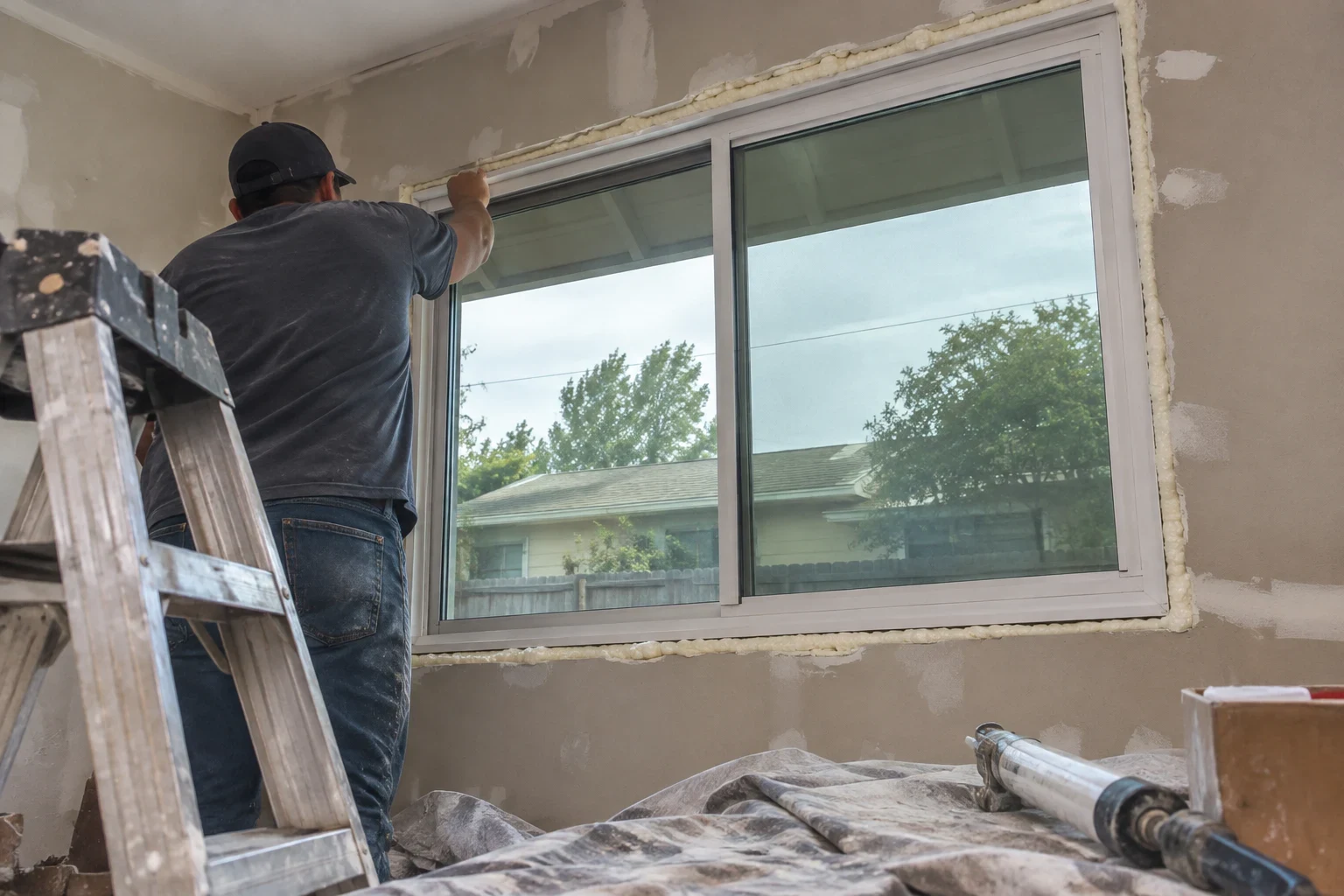
- A new window only performs if the gap around it is closed. We insulate and caulk the perimeter inside and out so air and water stay where they belong.
- Cleanup and haul-away
- We vacuum, wipe down sills and take the old frames and glass with us.
Signs your windows are wasting energy
Rooms that won't cool down
If a room stays hot no matter how long the AC runs, the glass is often to blame. Through Walnut's long summers, afternoon sun on single-pane glass adds heat faster than the system can pull it out.
Fog between the panes
Haze or moisture trapped between two panes means the seal has failed. The insulating gas has leaked out, and the window now works about like single-pane glass.
Glass hot to the touch
Put your hand on the glass on a sunny afternoon. If it feels warm, that heat is coming into the room.
Drafts around the frame
Whistling on a windy day or curtains that move with the window shut point to worn seals or a frame that has shifted.
Faded floors and furniture
Sun through plain glass fades rugs, wood floors and fabric. Low-E coatings block most of the UV that does it.
What moves the price
Your price comes down to how many windows you replace, how big they are and which glass you choose. Every window gets its own line on the written estimate. That makes it easy to see what each opening costs and to add or drop one before you decide. Ask us about the per-window offer when we come out, since it has a minimum order and some size limits.
Number and size of windows
More openings cost more in total. Large picture windows and wide sliders also take more glass and more hands to lift and set safely.
Glass package
Different low-E coatings and gas fills carry different costs. We match the glass to the sun each side of your home gets, so you are not paying for more than a room needs.
Retrofit or full-frame
Most jobs fit the new window inside the old frame, which leaves stucco untouched. If the old frame is rotted or out of square, full removal adds labor and wall repair. Our Window Retrofitting page explains the difference.
Safety glass and odd shapes
Tempered glass where code requires it, plus arches or custom sizes, adds to the cost of those openings.
Upstairs access
Second-story windows need ladders or staging and more setup time to work safely.
How the work goes
- 1
Free in-home estimate
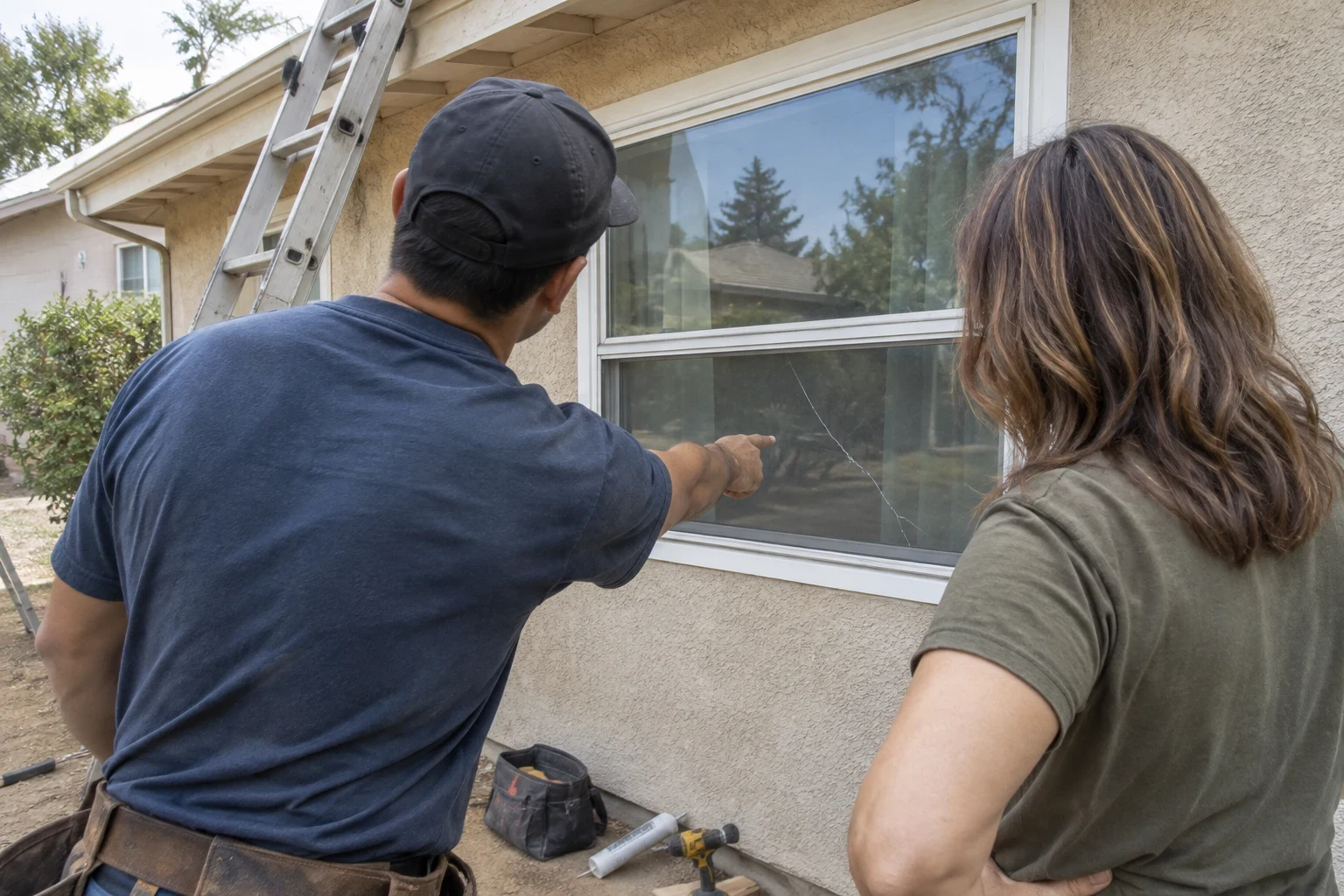
We measure each opening, check the frames and the wall around them, and talk through glass options. You get a written estimate that breaks out every window. There is no sales pressure and no obligation.
- 2
Ordering your windows
Windows are built to your measurements. We go over sizes, glass type and any tempered panes with you before we place the order.
- 3
Setting up a safe work area
On install day we lay drop cloths, move furniture back and mark off the outside area where old glass comes out. Before we start, we figure out with you where children and pets can spend the day away from the openings we're working on. Ladders and upstairs openings get set up properly, never rushed.
- 4
Remove, install and seal
We pull one old window and close up that opening before we start the next, so only one spot in the house is ever open. The new unit goes in level and square, then gets fastened, insulated and sealed.
- 5
Walkthrough
We clean up and walk you through every window. You see that each one opens, locks and seals, and we point out the NFRC label so you know what you paid for.
Energy efficient window questions
How much will new windows lower my power bill?
We can't promise a number. Savings depend on your old windows, how much sun hits them and how you run your AC. Most people notice cooler rooms and an air conditioner that cycles less, especially in sunny rooms.
What does the NFRC label tell me?
It is a rating sticker on each new window. The U-factor shows how well the window holds back heat, and lower is better. The solar heat gain number shows how much sun heat gets through, and lower means a cooler room in summer.
Will dual-pane windows make my home quieter?
Yes, in most cases. The sealed gap between the panes cuts outside noise like traffic and leaf blowers. It won't make a room silent, but the difference is easy to hear.
Do you have to tear out my stucco?
Usually not. Most energy efficient upgrades are done as retrofits that fit inside the existing frame. If the frame is damaged, we tell you at the estimate, before any work is scheduled.
What if something in my home gets damaged during the job?
We work to keep that from happening, with drop cloths, furniture moved back and old glass wrapped before it leaves the opening. If something does go wrong, we carry $2 million insurance coverage. You won't be left paying for our mistake.
Is lead paint a concern in my house?
If your home was built before 1978, the paint on old trim may contain lead. We contain dust, keep the area covered and clean up carefully so it doesn't spread through the house.
See what your windows are costing you
We'll come out, check every window and give you a written number. The estimate is free, with no sales pressure or obligation.